GST on under-construction apartments explained

Featured Image of GST on under-construction apartments explained


GST on under-construction apartments is a government tax charged at 1% on affordable homes up to ₹45 lakh and 5% on regular or luxury flats without tax input credits, valid only before a project gets its Occupancy Certificate (OC). The tax treats an unfinished building as a construction service rather than a simple property sale. The law gives you a direct 33.33% (one-third) discount on land cost, so you only pay tax on the remaining two-thirds of the flat value. You pay this tax step by step as your building work moves ahead. Once the local city office hands over the OC, the flat counts as a finished home and the GST drops to 0%.

What Is GST on Under-Construction Property and When Does It Apply?


GST on under-construction property is a required tax you pay on building work when you buy a home that is not yet finished. It applies to every demand letter your builder sends before the city gives the building its final Occupancy Certificate.

  • Treated as a Service: The government views an unfinished flat as a building service, not a finished home sale.
  • The Cut-Off Line: You only pay GST on installments billed before the municipal body issues the OC or Completion Certificate (CC).
  • Payment by Milestones: Builders add GST to each bill as the building crosses stages like foundation, floor slabs, and brickwork.

Current GST Rates for Residential Property: Affordable vs. Non-Affordable


Current GST rates for residential flats are set at 1% for affordable homes and 5% for all other flats, and builders cannot pass on tax credits from raw materials like cement or steel. These slabs depend on the price tag of the home and its actual room size.

  • Affordable Flats (1% GST): Applies to flats priced up to ₹45 lakh with a carpet area of up to 60 sq. m. (645 sq. ft.) in metro cities, or up to 90 sq. m. (968 sq. ft.) in smaller towns.
  • Regular and Luxury Flats (5% GST): Covers any flat that costs more than ₹45 lakh or is bigger than 60 sq. m. in big cities like Hyderabad, Bengaluru, Chennai, and Mumbai.
  • Society Shops (5% GST): Small shops inside a housing society also pay 5% GST if their area makes up less than 15% of the total project space.

How the 1/3rd Statutory Land Abatement Rule Lowers Effective Tax


The one-third land abatement rule cuts 33.33% straight off your total agreement price so you do not pay GST on the value of the plot. This rule brings the official 7.5% tax rate down to an actual 5% on your total flat cost.

  • Official Tax Rate: The paper rate for normal housing sits at 7.5%, split into 3.75% Central GST and 3.75% State GST.
  • Final Payable Tax: Because the one-third land share is tax-free, you only pay tax on two-thirds of the cost, making the final tax exactly 5%.
  • Affordable Housing Rate: Affordable homes carry an official 1.5% tax, which drops to an effective 1% once the land discount applies.

Under-Construction vs. Ready-to-Move Apartments: Tax Differences


Under-construction apartments carry a GST rate of 1% or 5% across construction stages, while ready-to-move flats with an approved OC carry 0% GST. This simple difference can change how much cash you need on day one.

Detail Under-Construction Flat Ready Flat (With OC)
GST Rate 1% (Affordable) or 5% (Regular) 0% (Fully Tax-Free)
Land Deduction Built-in 1/3rd tax cut Not Applicable
Payment Plan Paid in stages as work happens Paid all at once or via home loan
Tax Input Credit Not allowed for buyer or builder Not Applicable
Stamp Duty & Registration Must pay per state rules Must pay per state rules

Practical GST Application: Cost Analysis for Auro Panorama, Kondapur


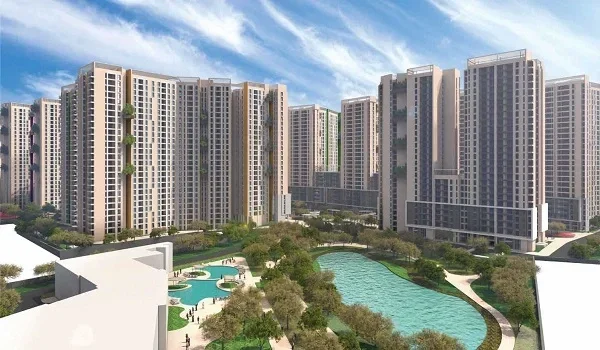
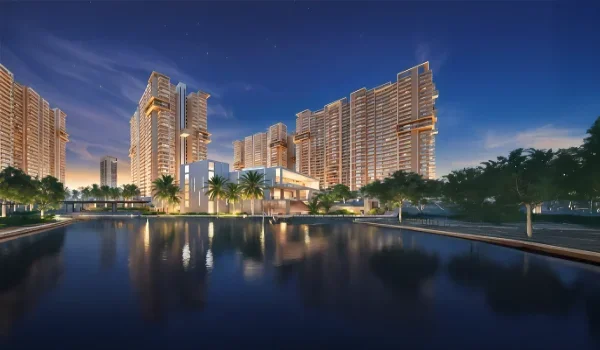
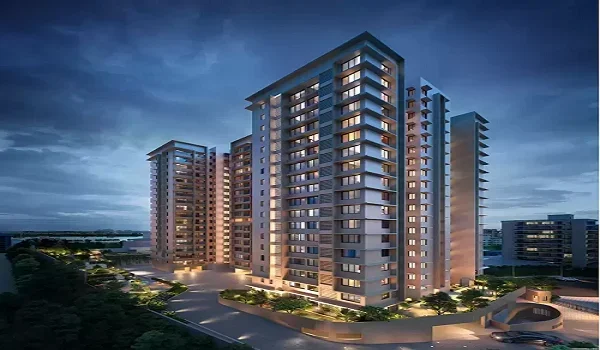
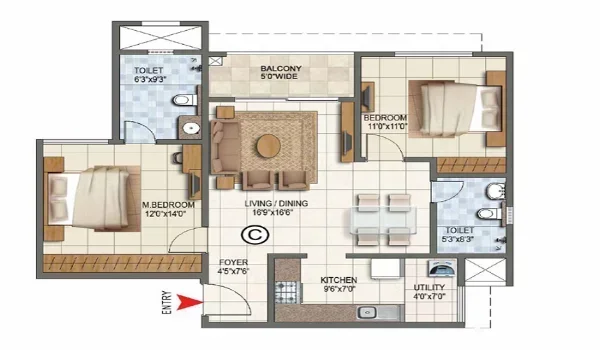
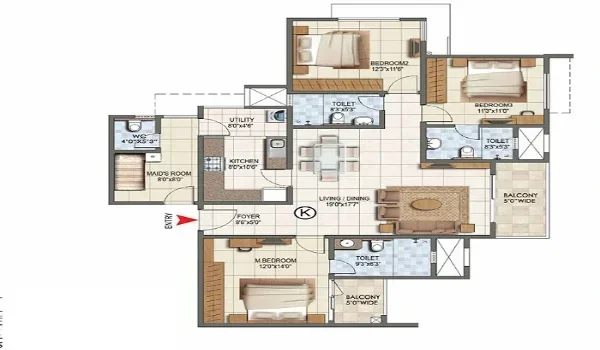
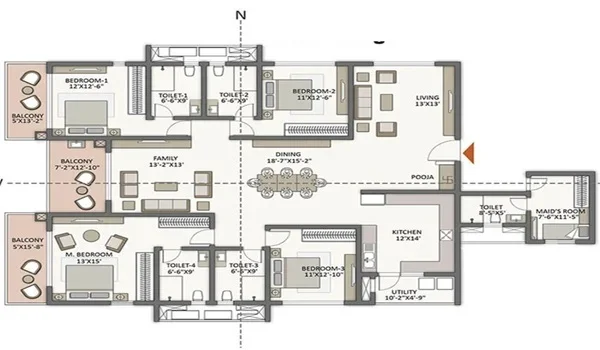
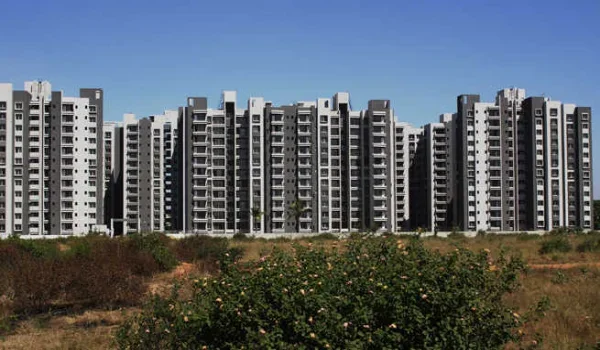
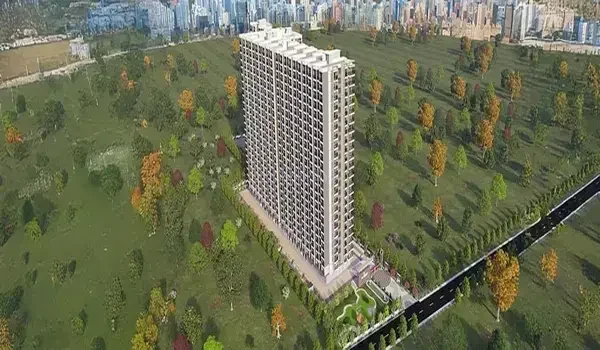
Auro Panorama in Kondapur, Hyderabad, is a large upcoming high-rise project where all flats fall under the 5% GST slab because their sizes and prices are above the affordable housing caps. Built on 9 acres with 4 towers (G+35 floors) and 1,500 flats, the project offers 2 BHK (1,400–1,500 sq. ft.), 3 BHK (1,700–1,860 sq. ft.), and 4 BHK (2,000–2,200 sq. ft.) homes.

  • GST on the Flat: Auro Panorama 2 BHK flats start at ₹2.2 crore. The GST rate for an under-construction home may be 5% if the home qualifies for the applicable tax rules.
  • GST During Construction: The project is planned for launch in December 2026, with completion set for December 2030. GST may apply to payments made during construction, based on the tax rules and the stage of the sale.
  • GST Amount: If the full ₹2.2 crore price is subject to 5% GST, the tax would be ₹11 lakh. This would include ₹5.5 lakh in CGST and ₹5.5 lakh in Telangana SGST. The actual tax depends on the agreement and the amount that is taxable.
  • Payments in Stages: You usually pay for an under-construction flat in stages. If GST applies, the builder may add it to each payment as it becomes due.
  • Extra Charges: Some separate services or charges, such as certain clubhouse or parking fees, may have a different GST rate. The rate depends on the type of charge and how it is billed.

Milestone-Wise GST Computation on Construction-Linked Payment Plans


Milestone-wise GST calculation means you pay tax only on the money due at each building stage when the builder sends a demand letter. This setup keeps your tax outflow spread across the whole building timeline.

  • Check Your Rate: See if your home falls under the 1% or 5% bracket based on its price and room size.
  • Take the Stage Amount: Look at the bill for that specific stage (for instance, a 10% slab demand on a ₹1 crore home is ₹10,00,000).
  • Calculate the Tax: Add 2.5% CGST (₹25,000) and 2.5% SGST (₹25,000) to that ₹10,00,000 demand.
  • Pay and Keep the Bill: You pay the total of ₹10,50,000 and get an official tax bill showing the builder's GST number and project details.

Input Tax Credit (ITC) Restrictions and Developer Procurement Rules


Input Tax Credit rules stopped builders from claiming back the taxes they pay on cement, steel, and worker contracts in 2019, which means developers must fold those costs into the base flat rate. To protect buyers, the government forces builders to buy most materials from approved tax-paying vendors.

  • No Tax Credit for Buyers: You cannot claim back the GST paid on your home against your personal income tax or business returns.
  • 80% Buying Rule: Builders must buy at least 80% of all their materials and services from registered GST sellers.
  • Penalty for Shortfall: If a builder buys less than 80% from registered sellers, they must pay an 18% tax penalty themselves, and 28% extra on any cement bought from unregistered sellers.

FAQs


1. Do I have to pay GST if I buy a flat after the builder gets the Occupancy Certificate?

No, you do not pay any GST once the builder receives the Occupancy Certificate or Completion Certificate from the local municipal office. The law considers an OC-approved flat as a completed property, making it completely tax-free under GST rules.

2. Can a builder add GST to stamp duty and registration fees?

No, builders cannot charge GST on stamp duty or registration fees. These are state government fees governed by your state's stamp office, so they are kept completely separate from GST bills.

3. What is the GST rate on parking slots and clubhouse fees?

If your parking slot and clubhouse access come bundled inside your main home agreement, they carry the standard 5% flat rate. If the builder bills them as separate, independent services, they attract 18% GST.

4. Can I get my GST back if I cancel my booking for an unfinished flat?

Yes, you can get a refund on your GST if you cancel your booking within the same financial year. The builder creates a credit note, fixes their tax account with the department, and returns the tax money to you.

5. Does GST apply if I buy a resale flat in an under-construction project?

Yes, GST applies if you buy an under-construction flat from another buyer before the building gets its OC. You step into the payment plan and pay the standard 1% or 5% GST on all remaining construction bills sent by the builder.

Enquiry
Enquire Now